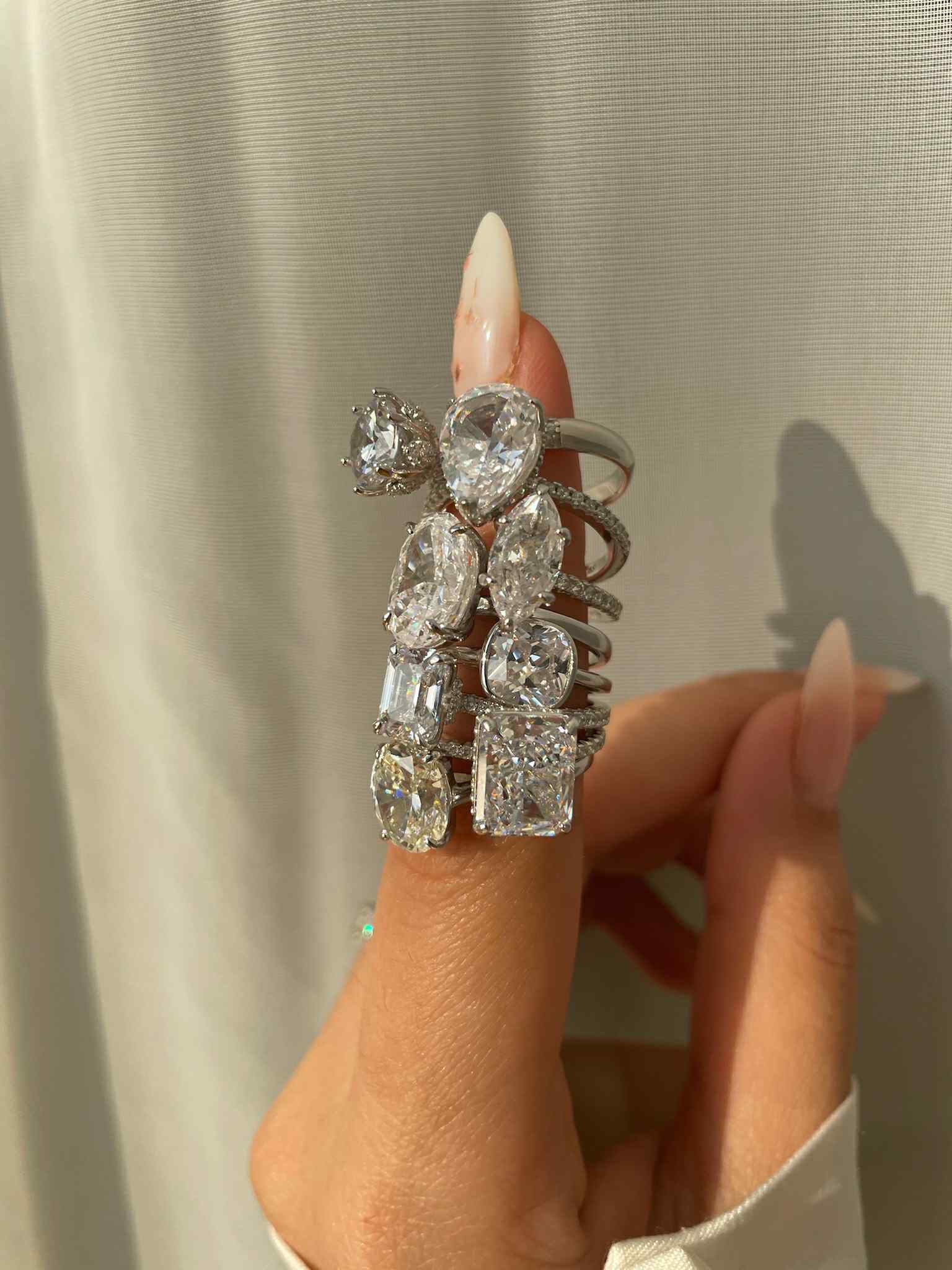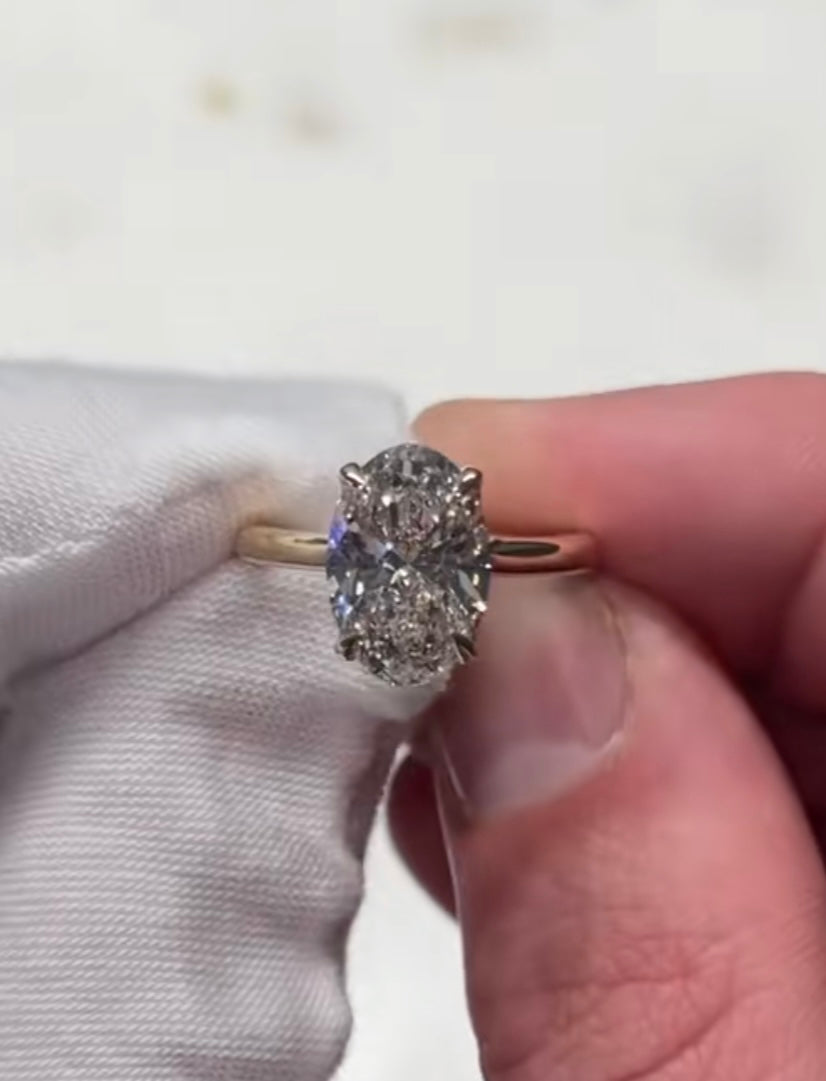
In the 1860s, diamonds were discovered in South Africa in quantities nobody expected. So many that the price would have collapsed entirely. The people who controlled the mines faced a crisis, and out of that crisis, the cartel De Beers was born.
So in the 1930s, with warehouses full of diamonds and a world in economic depression, De Beers hired an advertising agency and told them to manufacture desire where none existed.
What came back was one of the most successful campaigns in history. "A Diamond is Forever." Within a generation, these weren't slogans anymore, they were truth. Unquestioned, inherited, passed down. Nobody remembered they were invented in a boardroom to solve a stockpile problem.
That is what the diamond industry actually built. Not a symbol of love. A demand for a product that had none.
By doing that, they also destroyed something that had served women for centuries. Before the campaign, precious metals were how a woman held real security in her own hands, worn beautifully every day, and convertible when life demanded it. The diamond industry needed that to change. So they replaced it with a stone that loses most of its value the moment you try to sell it, backed by a mythology you were not supposed to question. When you buy, they win. When life changes and you try to sell, they win again, buying back for almost nothing and returning the same stone to the market at nearly the same price. The perfect loop.
Because jewelry shouldn’t just be worn. It should be trusted.
And the cost goes further than money. Blood diamonds are not a historical footnote. Conflict diamonds have funded wars, armed militias, and cost hundreds of thousands of lives. The Kimberley Process, the industry's own certification, is widely acknowledged to be insufficient. And lab diamonds do not solve this. A cheaper diamond still asks you to believe the industry's premise was right. I am not interested in a cheaper version of the same lie.
Once I went down this rabbit hole, I got angry. The manufactured desire, the human cost, the deliberate erasure of something that actually served women. So I wanted to build something against it. Not a workaround. Not a softer version of the same industry. A fine jewellery brand that would bring back what jewellery was always supposed to be, real precious metals at the center, with real weight, real craftsmanship, and real value that does not disappear the moment you walk out of the door.
And I knew exactly which stone to build it on. Not a diamond. Not a cheaper version of one. The only stone that actually does what the diamond industry spent a century promising. A moissanite, born in the stars, found on earth. First discovered by Nobel Prize-winning chemist Henri Moissan in 1893 inside a meteorite crater in Arizona. Genuinely, measurably rarer than diamond. More fire, more brilliance, more light. No cartel. No manufactured scarcity.
That is when MOISI was born. Named after the real, rare, earth-discovered stone that by itself dismantles everything the diamond industry was built on.
And backed by a buy-back guarantee that honours that tradition, security you can wear, beauty that holds its value, a promise that if life changes, we will be here.
That is what the diamond industry could never offer.
Because they always knew what their product was actually worth.
I know what mine is.
- Wasan Founder